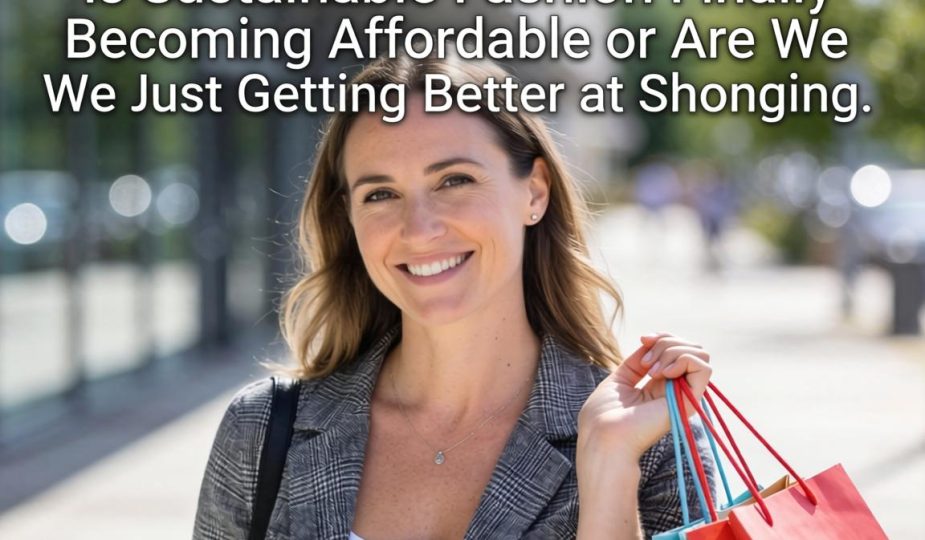


Okay guys, let’s be real for a second. When you hear “sustainable fashion,” what’s your immediate reaction? For years, mine was basically eye-rolling at $400 organic cotton t-shirts
and thinking ethical clothing was just for people with trust funds. But here’s what I think—something has shifted. Eco-friendly fabrics
, thrifting tips
, capsule wardrobe planning
—these search terms are absolutely dominating right now, and I’m seeing actual affordable options pop up everywhere. Like, everywhere.You might be wondering if this is just greenwashing with better marketing. And honestly? That’s a fair concern. A lot of people ask me how to tell the difference between brands that actually care and brands that just slapped a “conscious” label on the same old polyester. From my view, the answer isn’t perfect, but it’s getting easier to spot the fakes.So what does this mean for the season? It means sustainable style
isn’t a niche anymore—it’s becoming the baseline. I remember when shopping secondhand felt like admitting you couldn’t afford “real” clothes. Now? My most stylish friends brag about their vintage finds
and depop scores
. The stigma flipped completely, which is wild when you think about it.Let me break down what’s actually changed because a comparison helps here:
| Then (2020) | Now (2026) | |
|---|---|---|
| Sustainable options
|
Limited, expensive, kinda basic | Mainstream, varied price points, actually cute |
| Thrifting experience
|
Digging through musty bins | Curated apps, AI search, same-day delivery |
| Brand transparency
|
Vague claims, no proof | Blockchain tracking
, material sourcing stories |
| Consumer attitude
|
“I should care but…” | “Why wouldn’t I choose the better option?” |
The difference is massive. Most people don’t notice how fast this happened because it was gradual. But looking back? We crossed some invisible line where sustainable became… normal.Here’s where it gets interesting though. I tried an experiment last month. I needed a new winter coat
—my old one finally gave up after four years—and I gave myself a challenge. Could I find something ethical, warm, and under $200
? Three years ago, that would’ve been impossible. But I found three options. Three! Ended up with a recycled wool blend
from a B-Corp certified brand that cost $165. It’s gorgeous. Heavy. Warm. And I know exactly which factory made it because they put a QR code on the tag that shows the whole supply chain. That’s not nothing.You might be wondering about the quality question. Because let’s be real, there’s still this assumption that eco-friendly means fragile or weirdly shaped. Here’s what I think—that stereotype is dying fast. The innovation in textiles
right now is actually insane. Piñatex (pineapple leather)
, Tencel blends
, recycled cashmere
—these materials perform better than the old synthetics in a lot of ways. They breathe better. They age better. They don’t have that plasticky sheen that cheap fast fashion gets after two washes.But okay, let’s talk strategy because that’s what actually helps. If you’re trying to build a more sustainable closet without going broke, here’s what works:• The 30-wear rule
is still gold. Before buying anything, ask: will I wear this 30 times? Not “could I” but “will I actually.” Be honest. That alone cuts impulse purchases by like half.• Fabric content over brand name
. A lot of people ask me which brands are “safe”—but honestly, check the label first. 100% organic cotton, linen, wool, Tencel, hemp
—these are your friends. If it’s poly-blend from a “sustainable” brand, it’s still plastic.• Repair is having a moment
. I just learned to sew on buttons properly—thanks YouTube—and it’s embarrassingly satisfying. Small fixes extend garment life by years. Visible mending
is even trending as a design feature now. Holes become personality.• Rental for one-offs
. That wedding where you need something fancy? Don’t buy. Clothing rental services
have gotten so much better. The selection, the fit, the convenience—it’s actually easier than buying and storing something you’ll wear once.I went to a fashion panel last week—yeah, I’m that person now—and one of the speakers said something that stuck with me. She said the average person wears 20% of their wardrobe 80% of the time
. That’s… depressing. But also fixable. From my view, sustainable fashion isn’t really about buying different stuff. It’s about buying less of the wrong stuff
and more of the right stuff
. Even if the “right stuff” costs a bit more upfront, the cost per wear math usually wins.What does this mean for the future? Keep reading because I think we’re heading toward something interesting. The line between “sustainable brand” and “regular brand” is blurring. Soon it’ll just be… how clothes are made. The ones still using virgin polyester
and unethical labor
will be the outliers, the ones you have to explain. That’s the flip I’m waiting for.You might be wondering if individual choices even matter when the fashion industry is still so massive and messy. Here’s what I think—yeah, they do. Not because your one purchase saves the planet, but because collective behavior shifts markets
. Brands follow money. When millions of us start asking “who made this” and “what’s it made of,” supply chains change. We’re already seeing it. Deadstock fabrics
—basically leftover materials that used to get burned—are now premium selling points. That’s consumer pressure working.The best part? You don’t have to be perfect. I still have some fast fashion pieces from before I knew better. I still occasionally buy something questionable because I’m human and broke sometimes. But the direction matters more than perfection. Most people don’t notice your purity—they notice that you’re thinking about it, talking about it, making slightly better choices over time.From my view, affordable sustainable fashion isn’t a myth anymore. It’s just… shopping smart in 2026. And honestly? It feels better. My closet is smaller now, but I actually wear everything in it. That’s a different kind of luxury.